Monitoring The Trust Fuel Gauge

Linda Carlisle • September 30, 2026

In the Trust Economy, even a sound strategy can crash and burn when the tank runs dry.
A few weeks ago, I wrote about why it might be time to retire one of our favorite business metaphors: “Flying the plane while building it.”


Apparently, I can't leave well enough alone.


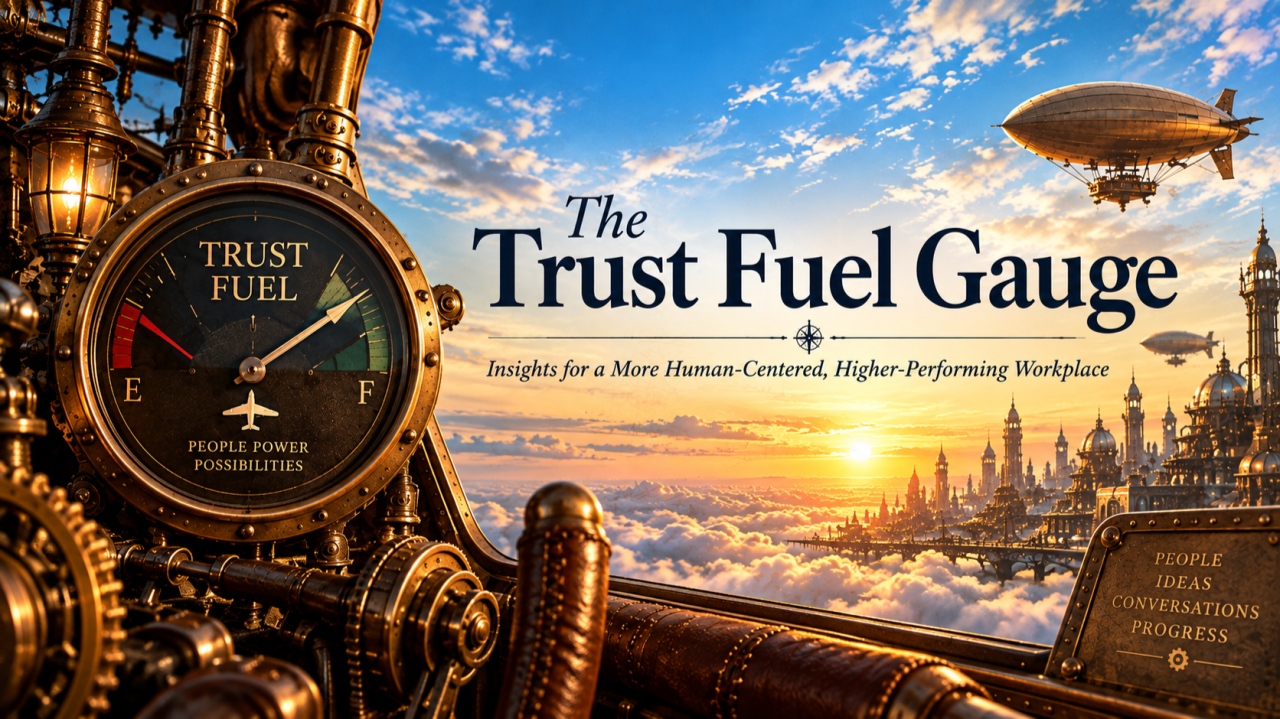
Today, I'd like to introduce another airplane metaphor: The Trust Fuel Gauge.


We talk a lot about the emerging “Trust Economy.” Usually, we're talking about trust as something businesses need to earn from customers: trust in a brand or product, trust that a company will protect our data, deliver what it promises and behave responsibly (and not let its AI kill us all).


But there's another trust economy operating INSIDE our organizations, and I would argue it has just as much power to determine whether a business succeeds.


Trust is jet fuel for the modern economy.


Inside an organization, trust fuels the behaviors that turn strategy into performance. When trust levels are high, organizations spend less energy overcoming friction and more energy moving forward. People feel empowered to make decisions and safe taking reasonable risks; they collaborate more freely, raise problems before they become crises and give leaders the benefit of the doubt when all the answers aren't yet available.


They're also more willing to follow an organization through uncertainty because experience has taught them that its leaders will tell them what they can, acknowledge what they can't, and do what they say they will do.


That's an extraordinarily valuable organizational asset. The problem is that trust takes a very long time to accumulate and remarkably little time to burn through.


Trust is a reserve


Jet fuel ultimately comes from raw materials created by natural processes over geological time. We can extract those materials and refine them into something enormously powerful, but we can't manufacture another million years' worth on Tuesday because we suddenly need more.

Organizational trust isn't so different.


It accumulates through repeated experience over time, but time alone isn't enough. Trust gets “refined” through the countless interactions in which people compare what an organization says with what it actually does.


Does leadership keep its commitments? Are employees told difficult news directly, or do they learn it through the rumor mill...or from a headline on CNN? Can a manager say, “I don't know yet, but I'll find out,” and actually come back with an answer? When the company says people are its greatest asset, do its decisions suggest leadership actually believes it?


Over time, those experiences accumulate into reserves of trust.


Or they don't.


The dangerous part is that there's no illuminated gauge on the CEO's dashboard saying TRUST RESERVE: 23%.


Employee engagement and listening data may be the closest thing we have. Yet a disappointing reading too often leads immediately to tactical efforts designed to “improve engagement,” another recognition program, another employee event, another initiative intended to change how employees respond.

Sometimes the gauge may be telling us something different.


Maybe it's telling leaders to examine their own behaviors. Where are we creating friction? Have our actions contradicted our words? Are we making withdrawals from the trust reserve without realizing it? Before trying to goose the reading on the gauge, perhaps we should be asking whether leadership needs to start refining more fuel.


Because those withdrawals can be surprisingly easy to miss: an unexplained decision, a promise quietly abandoned, a little corporate spin or leadership behavior that contradicts the values on the wall. None may seem catastrophic on its own, but employees notice and remember. The tank doesn't magically refill.

Eventually, every organization encounters a Moment that Matters™...exactly when it needs those trust reserves most.


A Moment that Matters™ puts trust to the test


An acquisition, restructuring, layoff, new CEO, major technology implementation or new strategy can disrupt people's understanding of the organization and their place within it.


Employees aren't only wondering what the change means for the business. They're trying to understand what it means for them, their jobs, their bosses, their teams and the work they do every day. They may be wondering whether they'll be able to succeed in the new environment, whether the work they've already done still matters, or even whether this is still a place where they want to work.


At the same time, these are the very people being asked to do the work required to produce outcomes they cannot yet see. They're expected to integrate the acquisition, make the restructuring work, adopt the new technology or change how they work to deliver a new strategy, while taking it largely on faith that the promised result will ultimately make the organization, and hopefully their own working lives, better.


More fundamentally, they're being asked to believe that leadership knows where the organization is going, even when leaders can't yet answer every question about how they'll get there.


These emotionally charged, labor-intensive moments can burn through a lot of trust.


Sometimes leaders are genuinely surprised when employees aren't willing to extend that trust automatically. But trust isn't an entitlement that comes with the corner office; it's an asset leadership has been accumulating, or depleting, for years.


And because trust-building is still too often dismissed as one of those “soft” leadership skills, leaders can be surprised by just how hard it is to fly the plane through stormy weather without sufficient trust in the reserve.

Leaders often don't realize how much trust they've been burning until they really need it.


When trust drops, friction rises


The consequences aren't abstract.


When trust levels fall, organizational friction increases. People start second-guessing decisions and protecting themselves rather than taking reasonable risks. Information vacuums fill with rumors, while managers who aren't sure what they're allowed to say hesitate to say much of anything. Eventually, some high performers start considering their options, and customers may begin hearing different versions of the story depending on whom they talk to.


Change gets harder, too. Technology adoption can slow, integration can stall and new ways of working meet resistance. Leaders find themselves spending more organizational energy persuading people to move forward than they would have needed in a higher-trust environment.


And here's the part that matters most: the strategy itself may be perfectly sound.


The financial model may work. An acquisition may make strategic sense, a restructuring may genuinely be necessary, and the technology may be exactly what the business needs.


But strategies don't execute themselves. People do.


And people decide whether they trust the leaders steering the plane.


Communication can't manufacture trust


This is where I need to make an important distinction, particularly as someone who has spent a career in communications.


Good communication can't manufacture trust when leadership behavior consistently destroys it. No beautifully written CEO message can compensate for actions that repeatedly contradict the words in it. Town hall meetings don't erase years of broken promises, and clever communication strategies can't persuade employees that leaders are being transparent when their own experience tells them otherwise.


And yet, communication remains one of the primary ways people experience leadership.


Think about the evidence employees are collecting along the way. What did you tell us, and when? Did you tell us what you actually knew, including what you didn't know yet? Did you ask for our input and what we thought? Did anything happen as a result? Could our managers help us make sense of what was happening, and could we ask questions without worrying about the consequences?


Perhaps most importantly: Did what ultimately occurred actually resemble what you told us would happen?


Those experiences become evidence. Over time, they either add to the organization's trust reserves or drain them.


That's why communicating through a Moment that Matters™ can't simply mean crafting the announcement. Consequential change unfolds over weeks, months and sometimes years, and people need help continually connecting the dots between the enterprise strategy and what's happening in their business, their function, their team and their own work.


That means listening and responding as well as telling. It means equipping managers to carry the conversation to the team level, acknowledging what's changed and what hasn't, and continuing to communicate as reality inevitably becomes more complicated than the original PowerPoint.


Communication throughout that journey is one of the ways leadership protects, or squanders, one of the organization's most valuable and exhaustible assets.


Who is watching the fuel gauge?

Organizations have people responsible for financial performance, operations, legal risk, technology, human resources and marketing. During a major transformation, there may also be consultants, attorneys, bankers, project managers and outside advisors surrounding the leadership team.


Everyone is watching a gauge.

But who is watching the trust gauge?


Who is paying attention to how much uncertainty the organization is carrying and what employees are being asked to believe? Who's noticing the information vacuums, what managers are hearing, or the places where leadership's actions may be contradicting its words?


And ultimately, what happens to the business plan if the people responsible for carrying it out stop trusting the leaders steering the plane?


Those aren't merely communications questions. They're leadership questions, and in the Trust Economy, they're economic questions.


Leadership has an economic consequence. Human-centered leadership isn't an alternative to rigorous business performance; it's one of the conditions that makes sustained performance possible. And that's true for every business, not merely those whose leaders are inclined toward the “soft stuff.”


The board can approve the destination, the executive team can design a brilliant flight plan, and Finance can calculate precisely what the journey should cost.

But none of them can make the plane fly without fuel.


Trust is jet fuel for the modern economy.

Leaders can build reserves of it. They can conserve it. Or, they can squander it. And during the Moments that Matter™, they're going to need a lot of it.


So perhaps one more gauge belongs on the leadership dashboard.


Because when the trust tank runs dry, even a sound strategy can crash and burn.

What are your thoughts about TRUST BUILDING? Is it time to stop referring to interpersonal leadership strengths as "soft skills"?


Have you ever worked for a leader who dismissed these competencies as irrelevant? How hard was it to achieve the desired business outcomes in that environment? How long did you stay?

By Linda Carlisle • September 30, 2026
Why It May Be Time for a Better Metaphor for Organizational Transformation
By Linda Carlisle • August 31, 2026
This article in CHRO Daily explores Change Fatigue
By Linda Carlisle • August 21, 2026
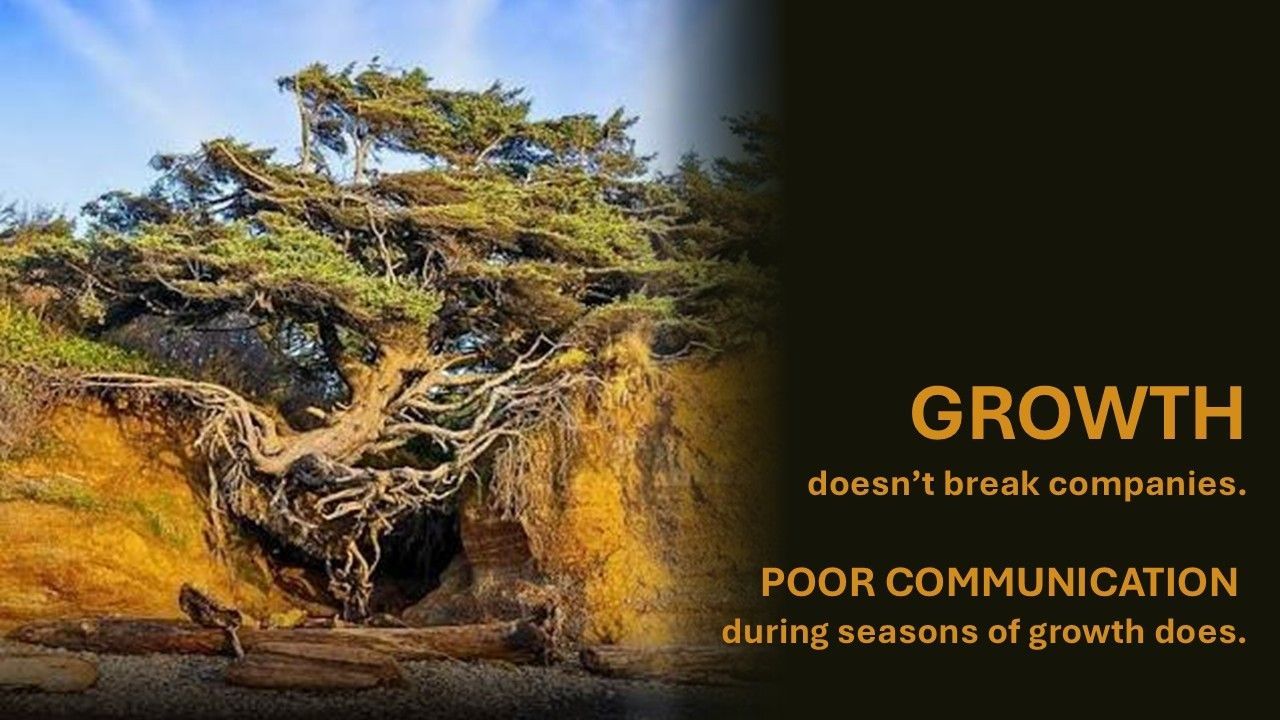
When a company appears on a “Fastest-growing” list, most people see success. I see a series of leadership moments quietly approaching. Don’t get me wrong -- rapid growth is wonderful. It means customers are buying. New people are joining your ranks. Opportunities are expanding. It means your organization is doing something right. But accelerated growth changes far more than the size of the organization.  Everything from your leadership practices and communication habits to the cultural norms that helped a company succeed at 50 or 100 employees doesn’t necessarily work when you need to reach 300, 500, or 1,000 people. Yet companies often invest heavily in preparing the business for its next stage of growth – bringing in new systems, facilities, technology, financing… and even talent, while investing far less in preparing for how they will help their people navigate the changes that growth brings with them. And that's where success can unexpectedly create risk. When I think about the companies that do this right, I think of the giant redwoods. Redwoods can grow more than 90 meters tall, yet their root systems are surprisingly shallow. Rather than growing deep, their roots spread widely and intertwine with those of neighboring trees, helping these enormous trees support one another. And beneath the forest floor, those roots connect with networks of mycorrhizal fungi that enable the exchange of nutrients and information across the forest. Growing organizations need their own version of that interconnected system. As companies become larger and more complex, they need strong, adaptive communication systems and cultures that allow information to travel, people to remain connected, and the organization to respond collectively to change. The taller the organization grows, the more intentional those connections need to become. The Founder Can't Know Everyone Anymore In smaller organizations with 2 to 50 or 100 people, communication often happens through relationships built by proximity and ‘management by walking around’ (MWA). You’ve undoubtedly seen it. The founder walks through the building, stopping to greet individual employees by name. People hear what’s happening because they sit near someone who has the inside scoop. New employees learn about the culture by observing the people on their team. In the startup and early growth stages, there may not be much of a formal communication infrastructure in the business, because the company doesn’t need one. Then the company grows. Suddenly, the founder can’t talk to everyone. In addition to the greater demands that face the leader of a high-growth company, there may also be multiple locations, functions or shifts. New employees may never even meet the people who established the company’s earliest traditions. Decisions move through several layers of leadership before reaching the people expected to execute them. Consider a 75-person manufacturer that grows to 300 employees and opens a second facility. Employees at the original plant still hear news directly from leaders they know, while employees at the new location depend on supervisors and word of mouth. Without intending to, the company has created two very different communication experiences. The organization has crossed an important threshold: It can no longer rely primarily on relationships to keep people connected. It needs systems. Establishing and implementing communication systems and protocols, and documenting cultural norms, doesn’t mean replacing human connection with corporate bureaucracy. It simply means intentionally creating communication channels, leadership practices, and cultural mechanisms that allow information to keep flowing, transparency and inclusion to continue, and critical connections to survive as the organization becomes more complex. The Middle Management Gap Growth also creates another challenge: more managers -- many of whom are promoted because they were exceptional individual contributors. They know the business, understand the customers – and they get results. But suddenly, their job isn't simply to perform the work. As managers, they’re expected to explain strategy and translate leadership decisions into meaningful guidance for their functional team. Whereas they were once accountable for doing their own work exceptionally well, they are now expected to coach other employees and help them succeed – both professionally and inter-personally. They are now responsible for helping their teams navigate uncertainty, interpret cultural norms, and handle difficult conversations. In other words, they become one of the organization’s most important communication channels. Yet few companies intentionally prepare them for that role…and this is where communication often begins to fracture. Managers are also expected to answer questions they may never have anticipated being asked -- sometimes questions leadership hasn’t fully answered for them. Without talking points, FAQs, or a clear feedback loop for unanswered questions, managers are left to punt, avoid the question, or offer their “best guess.” That’s how inconsistent messages -- and rumors -- begin. Imagine a company where the CEO has just announced a new growth strategy at the town hall and assume managers will carry the message forward to their teams. Despite there being no detailed talking points, FAQ documents, or other tools to explain how the strategy will impact each individual business function, one manager soldiers through to explain what it means for the team; another forwards the slides the CEO used in the town hall; a third admits, “I’m not really sure what this means for us.” One announcement has suddenly become three different employee experiences. Senior leaders believe they’ve communicated something because they announced it. Managers interpret it differently. Employees hear different versions depending on which manager they report to. And a message that seemed perfectly clear in the executive meeting becomes increasingly distorted as it travels through the organization. In the absence of communications infrastructure (email, newsletter, intranet, Slack/Teams, regular town halls, etc.), growth makes effective manager communication capability a business requirement. Manager cascade is essential -- but consistently excellent manager cascade is also notoriously difficult to achieve without dedicated support focused on developing communications tools that enable managers to be effective and stay aligned as they announce strategic initiatives. Culture Stops Happening Naturally Culture changes as organizations scale. At 50 employees, culture spreads largely through proximity. People watch how the founder behaves. They learn which behaviors get rewarded. Stories travel quickly. Informal norms are reinforced every day. But at 400 employees, culture can’t depend on proximity. It must spread deliberately, by design. Leaders must become much more deliberate about defining the behaviors that matter to the company’s future success and describing what those behaviors look like in practice. Then they must reinforce them through managers, employee experience, communications, leadership modeling, and recognition. Otherwise, something else happens: Every department, location, or leader begins creating its own version of the culture. That’s how organizations wake up one day and realize the company they built no longer feels like the company they remember. Imagine a company that has doubled its workforce in 18 months, and added a 2nd shift. Half the employees learned “how we do things here” by working alongside the founders and early leaders; the other half joined after that proximity disappeared. Unless the culture has been made explicit, those two groups may be working from very different definitions of what the company values. Culture didn’t disappear. It drifted and decentralized. That’s why I often talk about building Culture by Design...Not by Default. Growth doesn’t make culture less important, but it does make leaving culture to chance much riskier. Today's Growth Often Creates Tomorrow's Moment That Matters™ Fast-growing companies also frequently sustain their momentum through other major transitions. • Private equity investment. • An acquisition. • International expansion. • A new facility. • Founder retirement. • Second-generation leadership. • An outside CEO. • A significant technology implementation. None of these transitions indicate that something has gone wrong…Quite the opposite. In fact, they often occur precisely because the company has been successful. But each one introduces another layer of organizational complexity -- and another test of whether the company’s leadership, communication, and culture infrastructure have grown alongside the business. The best time to focus on building these capabilities isn’t after the next major transition has already begun. It's before you need them. Consider a company receiving a significant capital infusion to acquire a competitor, build a new facility or dramatically expand production. The financial investment may solve the capacity problem, but it doesn't automatically create leadership alignment, strong communications discipline and practices, manager readiness, employee engagement or a unified culture. Those capabilities have to be built, too. And sophisticated growth planning should anticipate those needs before the capital is deployed…not discover them after execution begins. When Communication Becomes a Strategic Capability Eventually, growing organizations reach a point where communication can no longer be something “the leaders do” by walking around and chatting with people, or having more an more meetings. As organizations grow, “we all communicate” is no longer a communications strategy. The organization needs a disciplined approach for understanding what people need to know, which initiatives require coordinated communication, who needs to hear what and when, and which channels and messengers are best suited to the audience and the moment. • Leadership alignment before major announcements. • Manager toolkits that help supervisors translate strategy for their teams. • Internal communication channels that reliably reach employees across locations and functions. • Listening mechanisms that help leaders understand what employees are experiencing. • More intentional onboarding. • A stronger employer brand. • Greater executive visibility. • Clearer connections between business strategy and employees’ everyday work. These communications capabilities are not critical because communication suddenly becomes important. They become more essential as the organization becomes more complex. Because complexity creates distance. Distance between leaders and employees. Between strategy and execution. Between the culture leadership believes exists and the culture employees experience. A company can open its new facility on schedule and still struggle operationally if employees don’t understand why the company is expanding, what the change means for them, how the two locations will work together, or which cultural norms must remain consistent. The building may be ready for business before the organization is ready to operate as one company. And strategic organizational communication capabilities close these gaps in understanding. Growth Itself Is a Moment That Matters™ We tend to think about organizational communication challenges when something dramatic happens -- a merger, restructuring, new technology or strategy, a CEO transition, or another major transformation. And yes, any organization that undergoes these major milestones without addressing gaps in its professional communication capabilities is likely to struggle. But even with that said, some of the most consequential Moments that Matter™ arrive much more quietly, and they can outgrow your organization’s existing communication capabilities and cultural infrastructure without anyone immediately recognizing what’s happening. Consider the following everyday occurrences that quietly break the company’s ability to communicate effectively: • The company adds another 100 employees. • A second location opens. • The founder can’t attend every meeting anymore. • Another layer of management appears. • People who once knew one another personally now recognize only a fraction of their colleagues. In each of these situations, nothing is wrong. In fact, the company is winning. But success itself has fundamentally changed the organization. Fast growth deserves to be celebrated. But leaders shouldn’t wait until the next major transition to strengthen the culture and communication systems that will help their organizations scale. Because companies rarely stumble simply because demand exceeded capacity and the company needed to grow. They stumble when their leadership practices, communication systems, and culture don't evolve as quickly as the business does. If leadership says, “Give us the capital and resources we need, and we’ll grow” -- and someone provides them -- leadership then has an obligation to ensure the organization can convert those resources into performance. When a business struggles after receiving the capital, equipment, technology or acquisition it said it needed to reach the next level, stakeholders are justified in asking whether leadership adequately prepared the organization to capitalize on that investment. If the resources are there but the organization still can’t execute because people aren’t aligned, managers aren’t prepared, cultures aren’t integrating, or employees aren’t engaged, the problem may no longer be resources. It may be organizational readiness. And for a PE investor, board, or other stakeholder, that’s when a communication and culture problem can begin to look like a leadership problem. So yes, prepare the business for growth. Invest in the facility, technology, acquisition, and talent that will take the company to the next level. But invest in the communication and culture infrastructure that will help your people take it there, too. Like the redwoods, extraordinary growth requires an equally strong system of connection and support. The time to build that infrastructure isn't after growth exposes the gaps. It's before. Is your firm growing faster than its communication & culture infrastructure? If growth, expansion, acquisition or another major transition is on your horizon, I’d be happy to compare notes on what your organization may need before the gaps begin to show.
By Linda Carlisle • August 20, 2026
I am SO pleased to be a part of this new Podcast Episode of FUTURE VENTURES - CLARITY AT SCALE During this episode, host Maxim and I discuss 5 Key Topics: ** Communication as organizational infrastructure ** Culture by design, not default ** Turning strategy into a story people can enter ** Communicating through Moments that Matter™ ** Listening, authenticity, and trust ...arriving at three key insights: 1) As companies grow, communication should not depend on the founder being everywhere. What worked in the beginning needs to become a simple, repeatable system that keeps things clear and avoids mixed messages. 2) Culture is expressed through repeated behaviors, not just statements on a wall. Scaling leaders need to decide which behaviors they want to keep, which need to change, and how those expectations shape everyday decisions. 3) Employees are more likely to accept change when they can see themselves in that future. Founders still need to set the direction, but clear communication helps connect that vision to people’s work, growth, and sense of belonging. Hope you enjoy listening as much as I enjoyed guesting! _________________________________________________________ FUTURE VENTURES is the podcast for founders, operators, and investors who are building companies worth owning for the long term -- and who need to think clearly about capital, structure, strategy, and growth to get there. Each episode cuts through the noise around scaling: how to structure a deal, how to position a business for institutional capital, how to build operational leverage without losing control, and how to make the high-stakes decisions that compound in value long after the moment has passed. Hosted by Maxim Atanassov, CPA-CA - a four-time founder and the Managing Partner of Future Ventures Corp. Since 2018, FVC has invested in, incubated, and scaled companies across sectors — with a focus on platform opportunities that compound in value. Maxim's background spans executive leadership inside Canada's largest energy companies and senior advisory at Deloitte and EY. He's a CPA-CA who has sat at the table where capital gets deployed, governance gets built, and hard decisions get made. Now he helps founders get there faster. https://lnkd.in/g8KStgxX
By Linda Carlisle • June 18, 2026
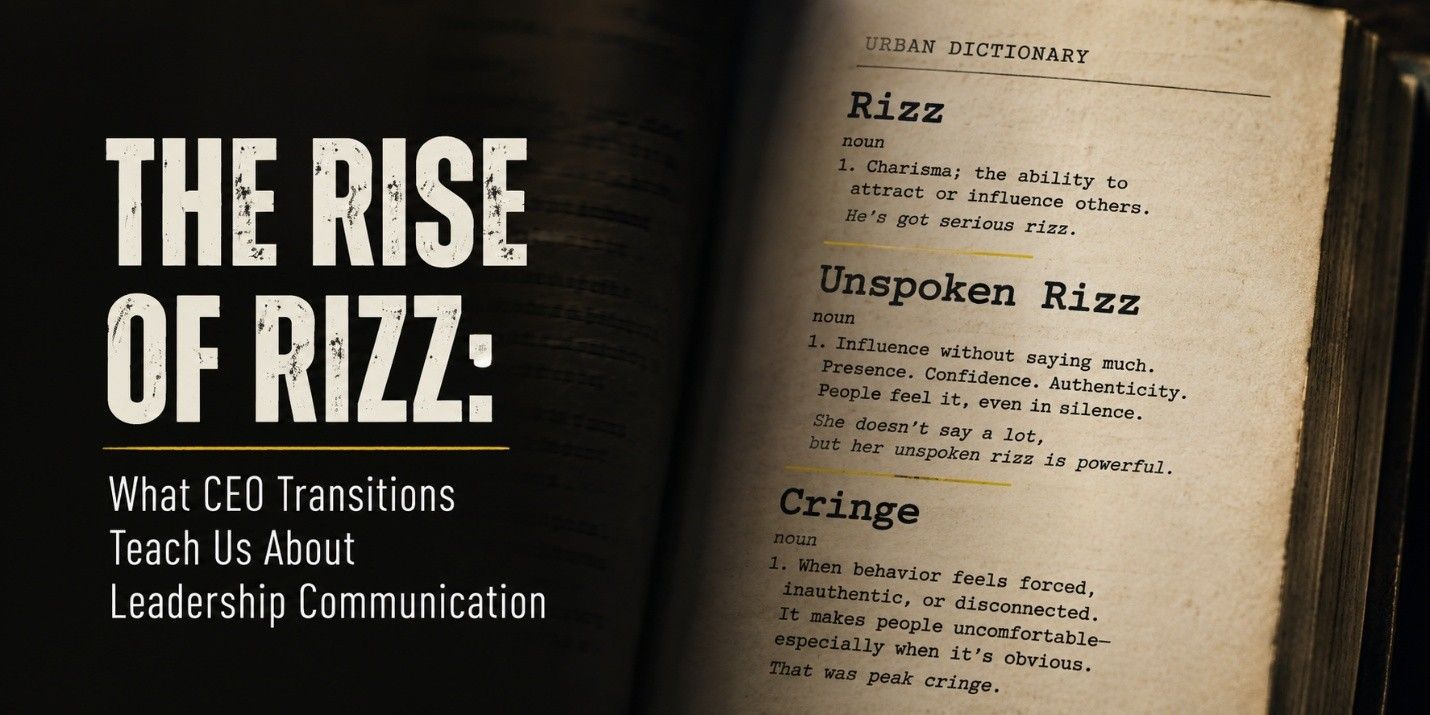
From charisma to credibility: navigating leadership transitions in an era of podcasts, social media, and heightened employee expectations.
By Linda Carlisle • June 10, 2026
Linda Carlisle guests with host John Pezoulas on the ReadySetExec podcast
By Linda Carlisle • May 18, 2026
Comm-ext Launches Communications Toolkit to Help Leaders Navigate Layoffs Without Damaging Trust, Culture or Performance 
Earth Day Reflection text over a sunny park scene with a parked car, trees, and a person near a tree
By Linda Carlisle • April 28, 2026
Understand the shift from childhood environmental awareness to today's climate crisis. Join us in driving impactful change.
Abstract seashell with pearl on sandy background, overlaid with quote: “Great communicators layer messages with care.”
By Linda Carlisle • April 9, 2026
Integrate strategy & culture into daily messages for a stronger employee experience. Contact us for tailored communications solutions.
By Linda Carlisle • April 9, 2026
The case that's launched a thousand questions...
Show More